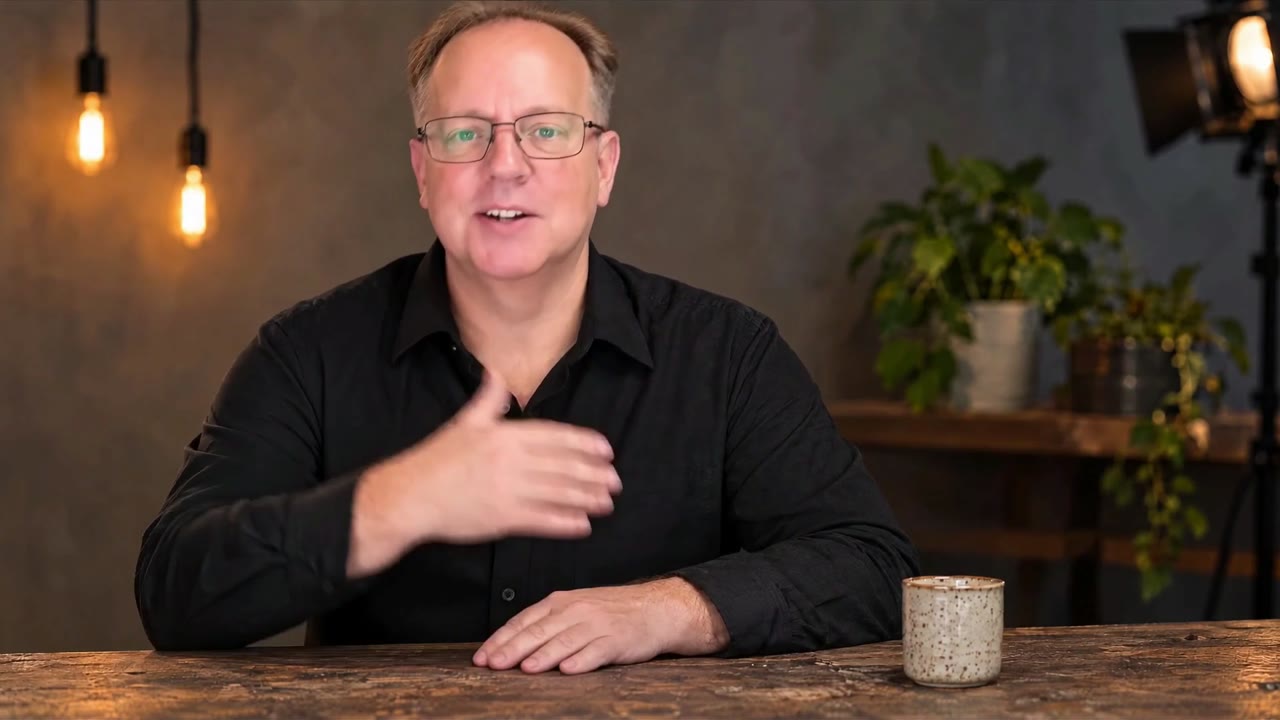
Module 4 expert interview
Design Thinking: What If the Problem Is the Handle?
with Dr. Greg Watson · Founder of 14 companies, 13 sold
Dr. Greg Watson opens Module 4 with the story behind OXO Good Grips, and three design-thinking moves for finding the right answer before you build: reframe, widen, and watch.
- Length
- 3:45
- Case study:
- OXO Good Grips
- Module reading
- Read Module 4: Design Thinking & Solution Development →
Key takeaways: Reframe, Widen, Watch
Reframe. Check the question before you design anything. When people struggle, ask what's wrong with the design around them, not with them.
Widen. Come up with several truly different solutions, then compare them: Do people want it? Can we build it? Can we keep it going?
Watch. Build the smallest thing that answers your biggest question, give someone a real task, and don't help. Their confusion is your data.
Listen to the audio: design thinking with Dr. Greg Watson
The same interview as audio only, using far less data, for listening on the go.
Video chapters: OXO Good Grips and three design thinking moves
Full transcript: What If the Problem Is the Handle?
The line being spoken is highlighted as the video plays. Click any line to jump to that moment.
Sam Farber and the peeler
Imagine watching someone you love struggle to peel a potato. Not because they don't know how. Because it hurts to hold the tool. In the late 1980s, a man named Sam Farber watched his wife, Betsey, face exactly that. She had arthritis. And an ordinary kitchen peeler had become a small, daily struggle. Most people would have shrugged: "That's just the way peelers are." Sam asked a different question. Hold on to that. I'll tell you what it was at the end.
Meet Dr. Greg Watson
I'm Dr. Greg Watson. I've founded fourteen companies. And here's what building taught me: the first version of anything you make isn't an answer. It's a question.
Polishing the wrong answer
Most new founders treat it like an answer. They fall in love with their first good idea and start polishing it. A better logo. More features. A slicker demo. Why? Because uncertainty is uncomfortable, and polishing feels like progress. But polishing the wrong answer just gives you a shinier wrong answer. This chapter is about design thinking: how to find the right answer before you build.
Three moves
Three moves. Reframe. Widen. Watch.
Move one: Reframe
Move one: Reframe. Before you design anything, check the question. Picture people stuck on one side of a river. The obvious answer is a bridge. Years of work. Millions of dollars. But what if there's already a ferry... and people just can't find the schedule? Then the problem isn't the river. It's the information. So ask: "Is this the real problem, or just the first way I described it?" And when people struggle, don't ask what's wrong with them. Ask what's wrong with the design around them.
Move two: Widen
Move two: Widen. Your first good idea is the most dangerous one, because it makes you stop looking. So before you choose, come up with several truly different ways to solve the same problem. Not ten versions of one idea. Different paths. Then compare them with three questions. Do people want it? Can we actually build it? Can we keep it going? Go wide first. Then go narrow.
Move three: Watch
Move three: Watch. Build the smallest thing that answers your biggest question. A sketch. A paper version. A role-play. That's a prototype: a question you can hold in your hand. Then hand it to someone and give them a real task. And here's the hard part: don't help. When they get stuck, every instinct will tell you to jump in and explain. Don't. The moment you rescue them, you erase the evidence. Their confusion is your data.
Be honest about the demo
And be honest about what you're showing. A good-looking mockup is not a finished business. Don't let a pretty demo make promises you can't keep.
Back to Sam Farber and OXO
So, back to Sam Farber. The question he asked wasn't, "How do I make a better peeler?" It was closer to this: "What if the problem isn't Betsey's hands... what if it's the handle?" He worked with a design firm, Smart Design. They explored bigger, softer, non-slip handles. And in 1990, those tools launched as OXO Good Grips.
Design for everyone
Here's the part I love. Those handles weren't designed only for people with arthritis. They were designed to be easy for almost everyone. Design for the person who struggles most, and you often make it better for all of us.
Your challenge
So here's my challenge. The next time you watch someone struggle with something... a form, a tool, a website... and you catch yourself thinking, "They're doing it wrong"... stop. Ask the Farber question: "What if the problem is the handle?" That question is where great design begins. I'm Greg Watson. Welcome to Chapter 4. Let's go fix the handle.
About the expert
Dr. Greg Watson on design thinking
Founder of 14 companies, 13 sold, with more than 40 years of experience in business. Professor of Business at Pima Community College, previously director of the New Venture Development Program at the University of Arizona's McGuire Center for Entrepreneurship, and author of the open textbook Entrepreneurship Essentials.
More about Dr. Watson →Go deeper: Module 4, Design Thinking & Solution Development
Read Module 4 free online
- 4.1 Design Thinking & Creative Problem-Solving
How do I create innovative solutions that truly address customer needs?
- 4.2 Solution Design & Prototyping
How do I turn problem evidence into design criteria, and learn from prototypes without overpromising?
- 4.3 Evaluating Solution Concepts
Does my solution fit the problem, what does the feedback really show, and what should I do next?