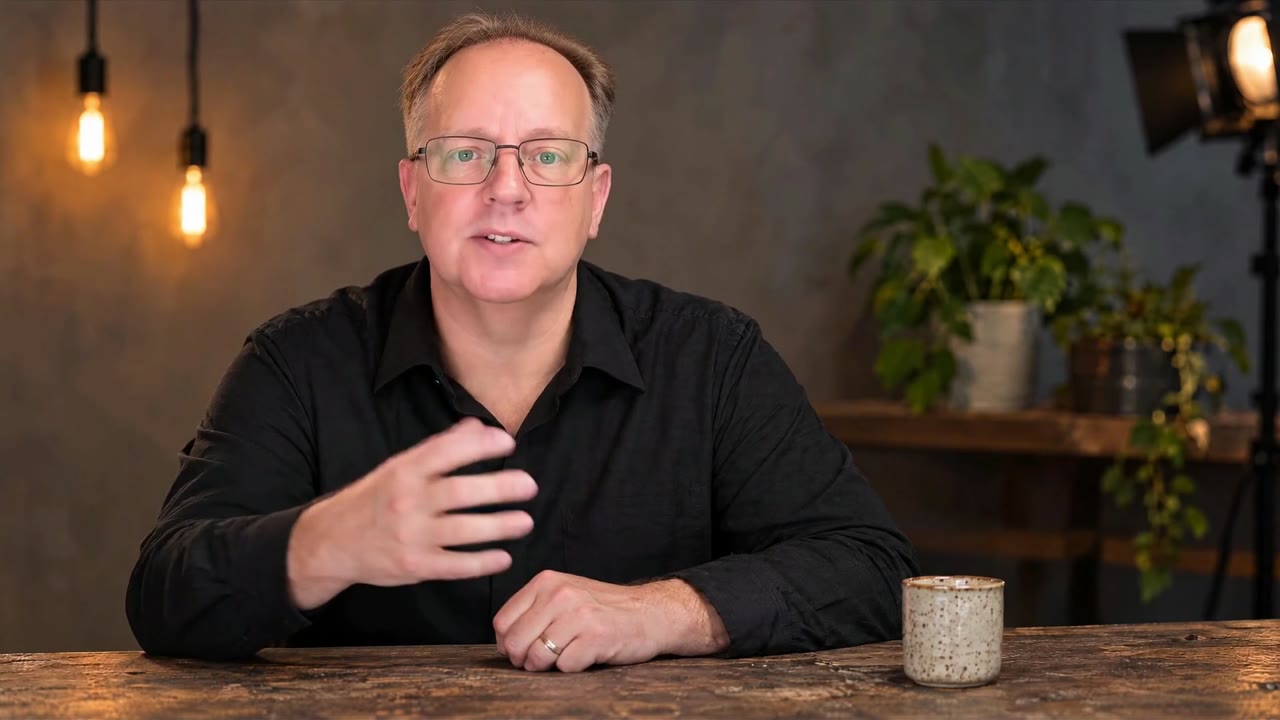
Module 8 expert interview
Pitching and Storytelling: Your Story Is a Promise
with Dr. Greg Watson · Founder of 14 companies, 13 sold
Dr. Greg Watson closes the book with Patagonia's "Don't Buy This Jacket" ad, and three moves for making a case people can say yes to: person, proof, and ask.
- Length
- 3:34
- Case study:
- Patagonia
- Module reading
- Read Module 8: Pitching & Entrepreneurial Storytelling →
Key takeaways: Person, Proof, Ask
Person. Start with the person who has the problem: a name, a moment, what it costs them. The story opens the door; your evidence walks through it.
Proof. Say what you saw, what you estimated, and what you're still guessing. Hard questions aren't attacks; "We don't know yet" can be the strongest answer.
Ask. Ask for something specific and sized for yes: a four-week pilot, one meeting, a small budget with a date to review it.
Listen to the audio: pitching and storytelling with Dr. Greg Watson
The same interview as audio only, using far less data, for listening on the go.
Video chapters: Patagonia and three pitching moves
Full transcript: Your Story Is a Promise
The line being spoken is highlighted as the video plays. Click any line to jump to that moment.
Patagonia's "Don't Buy This Jacket"
On Black Friday, 2011, the biggest shopping day of the year, a clothing company ran a newspaper ad with a strange headline. "Don't buy this jacket." A company... telling you not to buy its product. On the one day every store is begging you to. Why would anyone do that? Hold on to that question.
Meet Dr. Greg Watson
I'm Dr. Greg Watson. I've founded fourteen companies, and every one of them started the same way: with someone I had to convince. A customer. A partner. A buyer. And for the last two years, I've led the pitch competition at Pima Community College. I've watched a lot of students stand up with good ideas. Here's what I've learned. The pitches that win aren't the loudest. They're the clearest.
A pitch isn't a performance
Here's why so many good ideas never get a yes. We think a pitch is a performance. So we try to sound certain. We hide the hard parts. We pile on numbers and hope something sticks. But the people in that room aren't grading your confidence. They're trying to make a decision. Your job is to make that decision easy to understand. This is the last chapter, so let's bring it all together.
Three moves
Three moves. Person. Proof. Ask.
Move one: Person
Move one: Person. Don't start with your solution. Start with the person who has the problem. A name. A moment. What it costs them. A list of facts is not yet a story. A story is how people care enough to listen. But remember: the story opens the door. Your evidence has to walk through it.
Move two: Proof
Move two: Proof. Be honest about what you know. Say what you saw. Say what you estimated. And say what you're still guessing. Keep them separate. And when someone asks a hard question, don't panic. They're not attacking you. They're doing their job. Sometimes the strongest answer in the room is, "We don't know yet. Here's how we'll find out."
Move three: Ask
Move three: Ask. So many good presentations end with, "We hope you'll consider it." Consider what? Ask for something specific. A four-week pilot. One meeting. A small budget with a date to review it. Make your ask a size people can actually say yes to.
Back to Patagonia
Now, back to that jacket ad. The company was Patagonia. They said the message was about something bigger than one sale: buying less, keeping things longer, and the cost of what we throw away. You can agree or disagree with the strategy. But here's the lesson. A message like that only works if the company backs it up. Your story is a promise. And people will judge you by whether your actions keep it. That's true of a brand. It's true of a pitch. And it's true of you.
Your final challenge
So here's my final challenge. The next time you have to stand up and ask for something... a job, a raise, a budget, an investment... stop. Ask yourself: "Is my story true, is my proof honest, and is my ask clear?"
Where we started
Think about where we started. In Chapter 1, you learned to notice what everyone else had stopped seeing. Since then, you've learned to listen. To build something that holds. To fix the handle. To find out. To do the math. To adapt. And now, to make the case. You may never start a company. That's okay. You now see the world like an entrepreneur. And the world needs more people who can see a problem... and do something about it. I'm Greg Watson. Thank you for taking this journey with me. Now go make a difference.
About the expert
Dr. Greg Watson on pitching and storytelling
Founder of 14 companies, 13 sold, with more than 40 years of experience in business. Professor of Business at Pima Community College, previously director of the New Venture Development Program at the University of Arizona's McGuire Center for Entrepreneurship, and author of the open textbook Entrepreneurship Essentials.
More about Dr. Watson →Go deeper: Module 8, Pitching & Entrepreneurial Storytelling
Read Module 8 free online
- 8.1 Storytelling & Persuasive Communication
How do I communicate my entrepreneurial journey and business potential compellingly and persuasively?
- 8.2 Branding, Marketing & Customer Communication
What can people trust me to deliver, and how do they find, choose, and stay with it?
- 8.3 Evidence-Based Pitches & the Entrepreneurial Journey Beyond the Classroom
How do I turn eight modules of learning into one honest argument, with a specific ask?
Pitching and Storytelling case studies in Module 8
- Kiva and the person behind the financial term · Storytelling with financial facts
- Patagonia and the uncomfortable brand promise · Brand promise and authenticity
- Kickstarter and the story that includes risk · Crowdfunding pitch and honest risk
All 24 entrepreneurship case studies →