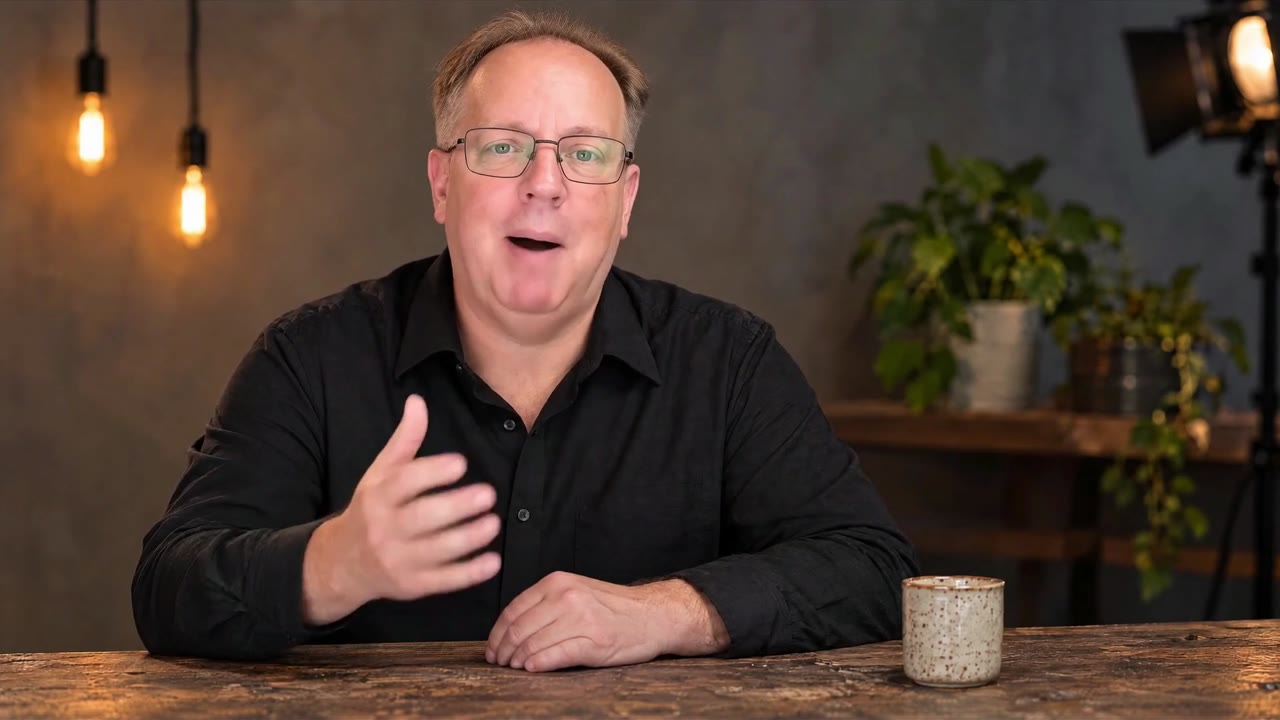
Module 1 expert interview
The Entrepreneurial Mindset: Value Isn't What You Build
with Dr. Greg Watson · Founder of 14 companies, 13 sold
Dr. Greg Watson opens Module 1 with the sale of America Beautiful Network and the three moves experienced entrepreneurs use to find problems worth solving: notice, question, and choose.
- Length
- 3:49
- Case study:
- America Beautiful Network
Key takeaways: Notice, Question, Choose
Notice. Listen for "That's just the way it works," then look for the workaround: the sticky note, the side spreadsheet, the customer who calls three companies.
Question. Be a detective, not a prosecutor. Write facts and guesses in separate columns, then go test the guesses.
Choose. Your first decision is which problem to learn more about, and how much time and money you can afford to lose finding out.
Listen to the audio: the entrepreneurial mindset with Dr. Greg Watson
The same interview as audio only, using far less data, for listening on the go.
Video chapters: America Beautiful Network and three opportunity moves
Full transcript: Value Isn't What You Build
The line being spoken is highlighted as the video plays. Click any line to jump to that moment.
Introduction
Entrepreneurship Essentials: Chapter 1. Welcome to the course.
Selling America Beautiful Network
I once sold a company I'd spent years building. And the buyer didn't want most of what we built. During the dot-com boom, I launched America Beautiful Network. At the time, it was the third-largest vertically integrated travel advertising network. Marriott was one of our advertisers. We built the whole machine. When we sold it, the buyer mainly wanted one piece: our ad-targeting technology. Remember that. I'll tell you why it matters at the end.
Meet Dr. Greg Watson
I'm Dr. Greg Watson. I've been an entrepreneur for more than forty years, with fourteen startups. My first one, Payroll Systems, started in my college dorm room. Eighteen months later, the largest payroll processor in the country bought it.
Why new businesses fail
Here's the most important thing those years taught me. Most new businesses don't fail because the founder can't build the product. They fail because the founder builds something nobody needed. Let me show you how that happens, because it could happen to you this semester.
Falling in love with your answer
You get an idea. It feels great. You give it a name. You tell your friends, and they say, "I'd totally use that." You spend a few weekends and a few hundred dollars on a logo and a website. Then you launch... and nobody comes. Not because you were lazy. Because you fell in love with your answer before you understood the problem. Why do we do that? Because not knowing feels uncomfortable. Because an idea makes that feeling go away. But feeling better is not the same as being right.
Three moves
So here's what experienced entrepreneurs do instead. Three moves. Notice. Question. Choose.
Move one: Notice
Move one: Notice. Listen for one sentence: "That's just the way it works." When you hear it, lean in. Then look for the workaround. The sticky note on the computer screen. The side spreadsheet someone keeps. The customer who calls three companies because none of them call back. When people go out of their way to get around a problem, that problem matters to them.
Move two: Question
Move two: Question. Be a detective, not a prosecutor. A prosecutor has already decided what happened. A detective is still finding out. Here's how to practice. "Three customers asked about the same form." That's a fact. "The form is confusing." That's a guess. Write your facts and your guesses in separate columns. Then go test the guesses.
Move three: Choose
Move three: Choose. Your first decision isn't what to build. It's which problem to learn more about. And before you spend anything, decide how much time and money you can afford to lose finding out. Sometimes the smart answer is "not yet." That isn't quitting. That's judgment.
Not just for founders
And you don't need to start a company to use this. The nurse who fixes confusing discharge instructions is doing it. So is the mechanic who fixes the delay everyone complains about. Entrepreneurship isn't a job title. It's a way of seeing.
Back to America Beautiful Network
Now, back to America Beautiful Network. We thought we were selling a network. The buyer paid for the part that solved a real problem: putting the right message in front of the right traveler. That's the lesson. Value isn't what you build. It's the problem you solve for someone else.
Your challenge
So here's my challenge. The next time someone tells you, "That's just the way it works"... don't nod. Get curious. And the next time you catch yourself naming an idea you haven't tested... stop. Write down what you actually saw. That's where real opportunities start. I'm Greg Watson. Welcome to Chapter 1. Let's get to work.
About the expert
Dr. Greg Watson on the entrepreneurial mindset
Founder of 14 companies, 13 sold, with more than 40 years of experience in business. Professor of Business at Pima Community College, previously director of the New Venture Development Program at the University of Arizona's McGuire Center for Entrepreneurship, and author of the open textbook Entrepreneurship Essentials.
More about Dr. Watson →Go deeper: Module 1, Entrepreneurial Foundation & Opportunity Awareness
Read Module 1 free online
- 1.1 Entrepreneurial Mindset & Method
What does it mean to think and act entrepreneurially, and how do I start seeing opportunities everywhere?
- 1.2 Opportunity Identification & Environmental Scanning
Where do opportunities come from, and how do I read the wider environment before choosing one to investigate?
- 1.3 From Observation to Opportunity Judgment
How do I turn what I observe into a reasoned judgment about which problem deserves the next step?
The Entrepreneurial Mindset case studies in Module 1
- Madam C. J. Walker: Experience, Opportunity, and a Network of Capabilities · Founder experience as opportunity
- Spencer Silver, Art Fry, and the Post-it Note · Matching a capability to a real need
- Dr. G. Venkataswamy and the Problem Behind the Organization · Seeing the problem behind the idea
All 24 entrepreneurship case studies →